EPoX EP-8KTA+ VIA KT-133
Friday, October 20, 2000
Introduction
Products manufactured by EPoX have always managed to satisfy customers; their motherboard have certainly received few complaints in the past. The EPoX EP-8KTA+ is the latest product out of EPoX HQ, and seeks to extend that trend. At first glance, it certainly succeeds - what with its Socket A interface, and VIA KT-133 chipset. So, without further ado, let's say we get down to business, and see what the EP-8KTA+ really has to offer.
The features
The EP-8KTA+ is immediately expandable via 6 PCI slots, 1 ISA slot, and an AGP port. It also sports 3 168-pin DIMM slots that are capable of handling 1.5GB of PC100, PC133, or VCM memory. As you can see, EPoX has pulled out all the expansion steps by not only including 6 PCI slots, but also conserving a place for legacy ISA devices.
Configuration of EPoX's EP-8KTA+ is accomplished primarily through the BIOS, but can also be performed using the on-board jumpers. As to the latter option, we find one block of 6 Dips labeled SW1. Using these, it is possible to manually assign a Vcore voltage to the CPU, with a value ranging from 1.475v, and 1.850v, in steps of 0.025v. A second set of Dip switches labeled SW2 allows the CPU's clock multiplier to be manually configured - provided that the CPU is unlocked to begin with. To really get into configuring the processor however, one needs to jump into the "Frequency/Voltage Control" menu in the BIOS. From there, it is possible to set the Front-Side Bus to a range of frequencies, including: 95Mhz, 100Mhz, 102Mhz, 104Mhz, 106Mhz, 107Mhz, 108Mhz, 109Mhz, 110Mhz, 111Mhz, 112Mhz, 113Mhz, 114Mhz, 116Mhz, 118Mhz, 120Mhz, 124Mhz, 127Mhz, 130Mhz, 133Mhz, 136Mhz, 140Mhz, 145Mhz, 150Mhz, 155Mhz, 160Mhz, and 166Mhz. Furthermore, from within the "Chipset Features Setup" menu, it is possible to set the operating frequency of the memory bus to 100MHz, or 133MHz.
Technical details
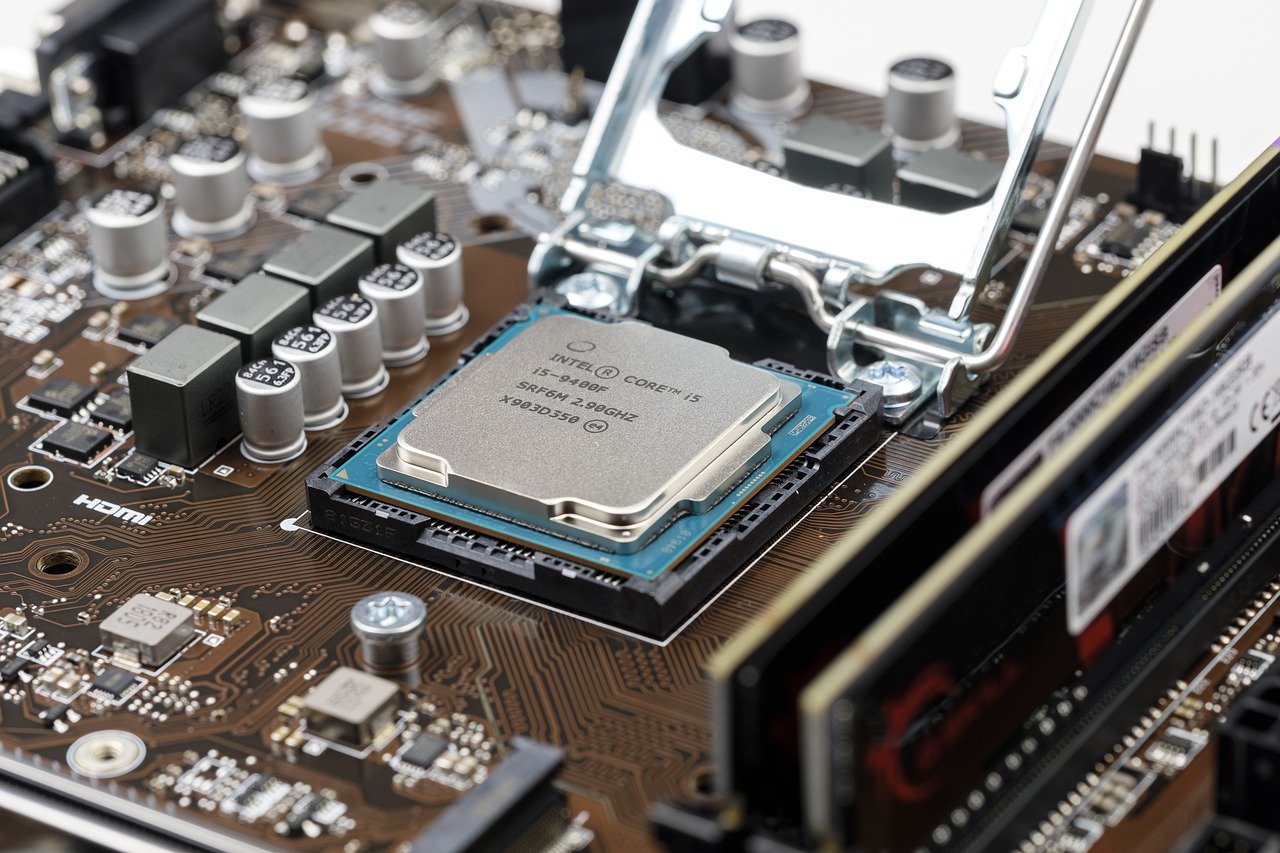
Plenty of space has been provided around the processor socket for the installation of a large heatsink.
The memory slots have been placed far enough from the AGP port that there is no chance of the memory retention bars coming into contact with the graphics card.
Sixteen 2200Mfd capacitors have been placed around the processor socket - more than sufficient in our book.
The CPU locking lever is made of plastic. Thus, one has to make sure that the CPU is properly inserted in its socket, and to manipulate the locking lever with care to avoid to break it.
Three fan connectors have been placed on-board, which is quite sufficient.
The hardware monitoring features are controlled by the internal circuitry of the VIA KT133 chipset.
Manual assignment of IRQs is also possible with this board.
Next: Additional features.