Shuttle AV18 VIA Apollo Pro133A

Wednesday, October 11, 2000


Introduction

It's been a good, long time since we've reviewed a motherboard based around the VIA Apollo Pro 133A chipset. So, when we received the Shuttle AV18, it really hit us as a blast from the not-so-distant past. This new Shuttle product is available in two versions. The Shuttle AV18, which we have, possesses a smaller selection of frequencies than its sibling - the AV18A - but has an integrated AC-97 sound-card that the latter lacks. That said, its time to get down to business, and review the board...


The features

The Shuttle AV18 is expandable via 5 PCI slots, 1 ISA slot, an AGP port, and an AMR slot. There are also 3 168-pin DIMM sockets available which can accept upto 1.5GB of PC66, PC100, or PC133 memory. We also appreciated the fact that Shuttle saw fit to include at least one ISA slot in the AV18's design, as it does allow a measure of compatibility with the many legacy ISA cards still floating around the computer scene.

Configuration of the AV18 is accomplished - for the most part - from within the BIOS. However there are also several jumpers available. Among those users may find useful, is the JP4 group, which can be used to set the CPU's clock multiplier. For the most part, though, these jumpers can be ignored, as most Intel processors ignore this setting because of their internal lock. There is also group JP7 however, which can be used to force the FSB to operate at 66MHz, 100MHz, or 133MHz. To really play with the FSB though, Overclockers will want to jump into the "Frequency/Voltage Control" menu within the BIOS. From there, it is possible to set the FSB at a frequency ranging from 66MHz to 166MHz, including: 66Mhz, 68Mhz, 75Mhz, 83Mhz, 95Mhz, 100Mhz, 103Mhz, 112Mhz, 124Mhz, 133Mhz, 138Mhz, 140Mhz, 150Mhz, 160Mhz, and 166Mhz. Within the "Chipset Features Setup" menu, there also lies a function allows the memory bus to be set to operate at a frequency 33MHz less than that of the FSB (provided the latter is working at 133MHz), or 33MHz greater (if the FSB is 100MHz).

Unfortunately, no options are provided for adjusting the processor's voltages.


Technical details

Plenty of space is provided around the processor for the installation of a big heatsink.

The memory slots are situated quite close to the AGP port, which brings the possibility of the memory retention clips coming in contact with an AGP graphics-card.

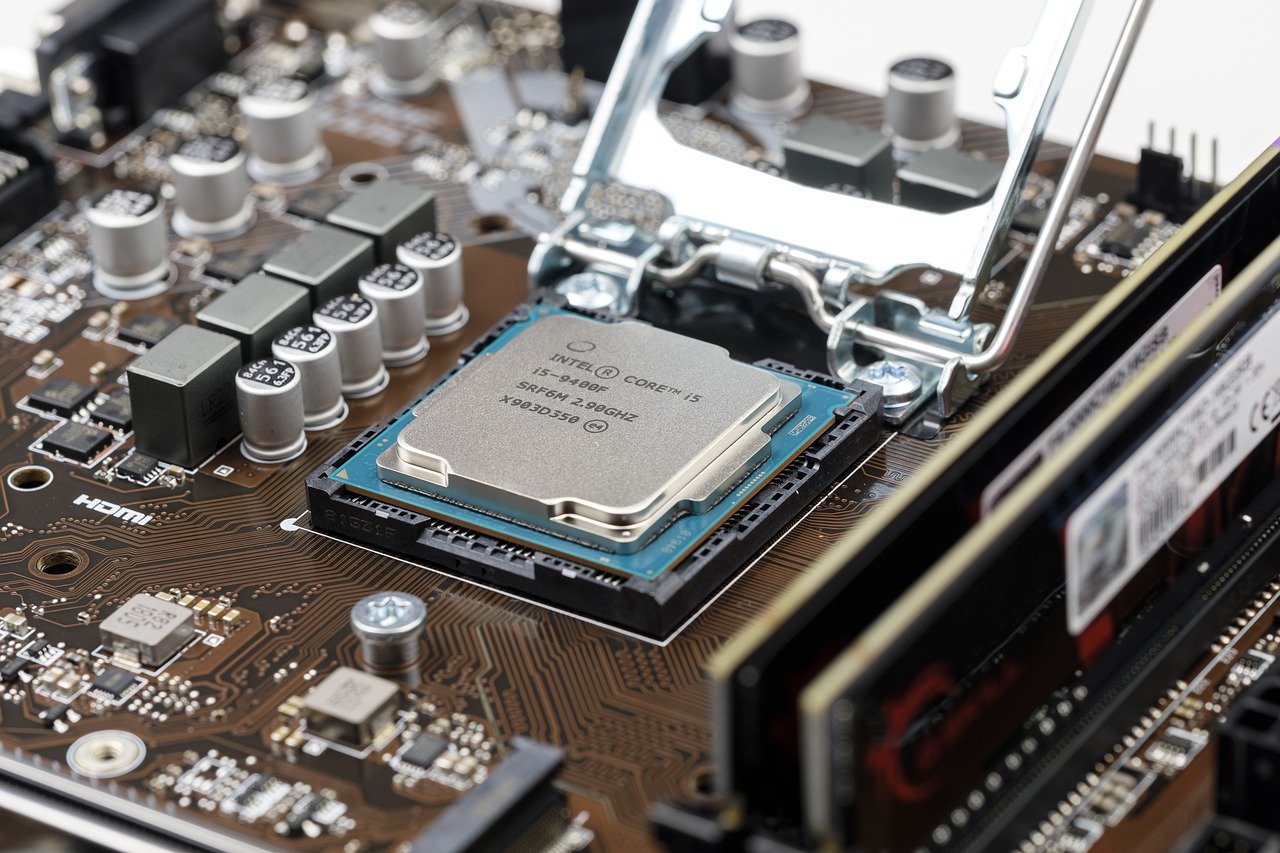
Seven 2700Mfd capacitors have been positioned around the processor socket - more than sufficient in our books.

The CPU retention lever is made of plastic. This is a distinct need to insure that the CPU's pins are well positioned in the processor socket, and to manipulate the locking lever with care.

Three fan connectors are available .

Hardware monitoring functions are controlled by a circuit which is internal to the chipset.

No option is provided for the manual assignment of IRQs.

Next: Additional features.